Researches
Here, I'm sharing topics that I enjoyed researching, although not focusing on a specific subject.

The Purest Example of Successful Marketing
In the mid-1990s, while fierce competition was unfolding in the Japanese beverage market, Pepsi was literally in an existential crisis. Coca Cola, the absolute ruler of the market, held 50% of the country's vending machines and reached a massive 31% market share, while Pepsi's share had dropped to a dangerous 3%. Realizing that aggressive American style "blind taste test" commercials backfired in Japanese culture, legendary art director Takuya Onuki developed a radical strategy in 1996 to save the brand: turning the product itself into a superhero. Pepsiman was born. Faceless, silver and blue, muscular, and whose only dialogue was the sound of a soda can opening. Crafted by the cinematic legend Industrial Light & Magic (ILM), this absurd hero rushed to the rescue of thirsty people, stealing the hearts of the Japanese public by always suffering a clumsy mishap at the end. This creative move shot Pepsi's 3% market share up to 14% in a short time, creating a literal commercial miracle.
In the mid-1990s, while fierce competition was unfolding in the Japanese beverage market, Pepsi
was literally in an existential crisis.
Coca Cola, the absolute ruler of the market, held 50% of the country's vending machines and
reached a massive
31% market share, while Pepsi's share had dropped to a dangerous 3%.
Realizing that aggressive American-style "blind taste test" commercials backfired in Japanese
culture,
legendary art director Takuya Onuki developed a radical strategy in 1996 to save the brand:
turning the product itself into a superhero.
Thus, Pepsiman was born: faceless, silver and blue, muscular, and whose only dialogue was the
sound of a soda can opening.
Crafted by the cinematic legend Industrial Light & Magic (ILM), this absurd hero rushed to the
rescue of thirsty people,
stealing the hearts of the Japanese public by always suffering a clumsy mishap at the end.
This creative move shot Pepsi's 3% market share up to 14% in a short time, creating a literal
commercial miracle.
The mascot's sales-multiplying impact encouraged the brand to take things a step further, and on
March 4, 1999,
a cult PlayStation 1 game made exclusively for the Japanese market was released.
Designed by studio KID as one of the early 3D pioneers of the
"Endless Runner" genre, which is downloaded billions of times on mobile devices today, the game
possessed a
unique character despite its tight budget.
Since there wasn't enough budget for high-quality animated cutscenes, they used incredibly cheap
yet equally
bizarre live-action videos featuring an American guy eating pizza and chips while drinking Pepsi
in front of the TV.
Despite being sold only in Japan, this 4-chapter title featured fully English menus and
voiceovers, and etched itself into
memory with its legendary surf-rock theme song.
When the Pepsiman ad campaign officially ended after running non-stop from 1996 to 2003, making
television history, the
character was expected to fade into obscurity.
However, the digital era had a completely different fate in store for this hero.
The game's lack of a language barrier and its absurd humor allowed Western gamers to rediscover
it online.
In particular, its live speedrun showcase at the massive 2016 charity event,
Summer Games Done Quick (SGDQ), transformed Pepsiman into a global internet meme and an
unprecedented cult phenomenon.
Born to resolve a 3% local market crisis in
Japan, this silver runner went far beyond numbers and sales targets,
taking his place in history as one of popular culture's most beloved, bizarre, and enduring
icons.
As a personal recommendation, I wouldn't suggest playing the game nowadays. Unfortunately, it has aged quite a bit, and even though it starts off well, your thoughts on the developers in the later sections can go way beyond pure hate. At the very least, I'd say play the beginning for about fifteen or twenty minutes and then call it quits.

More Than a Game: The Journey of Adapting Visual Novels into Anime
To be honest, Visual Novels are the type of media that looks the most "boring" from the outside, but guts you the hardest once you dive in. Think about it: a static character drawing sits on the screen for hours, a looping piano melody plays in the background, and you just click and read pages of text. But the magic starts in this very simplicity. You give a movie two hours at most, or consume a TV show in a week; yet in a good Visual Novel (think of legends like Clannad), you spend 80 to 100 hours sitting in the same room with those characters. You laugh together, listen to their silly daily chats, and without realizing it, you make that world your home. When things go wrong and tragedies or those famous "Bad Ends" start hitting, the reason you feel that blow right in the middle of your chest is precisely this massive time investment. You don't just read a story; it feels as if you've spent a lifetime with those characters.
To be honest, Visual Novels are the type of media that looks the most "boring" from the outside,
but guts you the hardest once you dive in.
Think about it: a static character drawing sits on the screen for hours, a looping piano melody
plays in the background, and you just click and read pages of text.
But the magic starts in this very simplicity.
You give a movie two hours at most, or consume a TV show in a week; yet in a good Visual Novel
(think of legends like Clannad),
you spend 80 to 100 hours sitting in the same room with those characters.
You laugh together, listen to their silly daily chats, and without realizing it, you make that
world your home.
When things go wrong and tragedies or those famous "Bad Ends" start hitting, the reason you feel
that blow right
in the middle of your chest is precisely this massive time investment.
You don't just read a story; it feels as if you've spent a lifetime with those characters.
In my opinion, what truly makes this genre impressive is that it turns the player into an
accomplice to the story.
Whether you are helplessly struggling in a time loop in Steins;Gate or exploring routes where
completely different
philosophies clash in Fate/stay night, a decision you make can be the end of a character you
love. When you read a tragic scene in a book, you blame the author;
but in a Visual Novel, when a character breaks down because of your wrong choice, you are left
alone with the guilt.
Works like Doki Doki Literature Club even take this to such an extreme that they break the
fourth wall and start messing directly with your computer and your mind.
This personal experience is what transforms the genre from just a game into a psychological
experiment.
That is precisely why adapting a VN into a 12 to 24 episode anime is usually a massive risk that
ends in disaster.
Because when you try to cram a 100 hour emotional buildup and the bond formed by the player's
own free will into a 20 minute linear video format,
the main glue holding the story together, meaning the effort you spent in that world and your
sense of responsibility, simply evaporates.
However, there are a few rare productions that actually pull off this seemingly "impossible"
transformation.
The secret behind legendary adaptations like
Steins;Gate, Clannad, or the Fate series lies in choosing to stay true to the emotional core and
main theme of the story,
rather than bringing every single detail word-for-word onto the screen. Instead of drowning the
screen in long dialogues for pages of internal monologues,
they deliver it to the viewer through a single silent glance, lighting, or that right musical
surge coming straight from the original game.
In short, a successful VN anime doesn't try to copy the game line for line;
it rebuilds that intense atmosphere and emotional weight you felt in the interactive world from
scratch,
making even a passive viewer feel it through the power of cinematic storytelling.
Even someone who is far from Visual Novel culture should definitely try the anime versions of the genre's best examples. CLANNAD and Steins;Gate are number one at this, I definitely need to point that out. Watch them, consume them, and think about them. You will never regret it.

My time has come..
To be completely honest, whenever I thought about databases and big data, I always pictured those traditional, clunky systems that crawl to a near-halt the moment you throw a massive dataset at them...
To be completely honest, whenever I thought about databases and big data,
I always pictured those traditional,
clunky systems that crawl to a near-halt the moment you throw a massive dataset at them.
But my introduction to Google Cloud’s BigQuery completely flipped that perspective.
At first, hearing that it was "serverless", meaning you don't have to manage or
configure any virtual machines, storage, or RAM, felt like just another marketing buzzword.
However, the second you actually try running standard SQL queries on gigabytes or terabytes of data, it’s mind-blowing;
it spits out results in literal seconds, as if you were just querying a tiny, local spreadsheet.
The coolest part under the hood is how it completely separates its storage engine from its compute engine.
Because they operate independently, you only pay for the exact amount of data you scan,
letting you focus entirely on analyzing data without ever having to worry about infrastructure bottlenecks.
To be honest, BigQuery really caught my attention because of my growing interest in data science.
I mean, who could possibly say no to lightning-fast analytics, the ability to store massive datasets, or seamless cross-platform support?
Well, I certainly couldn't.
Since I already enjoy messing around with databases,
I figured it was finally time to step things up and move to the next level.
Will it truly be worth it? We’ll see.
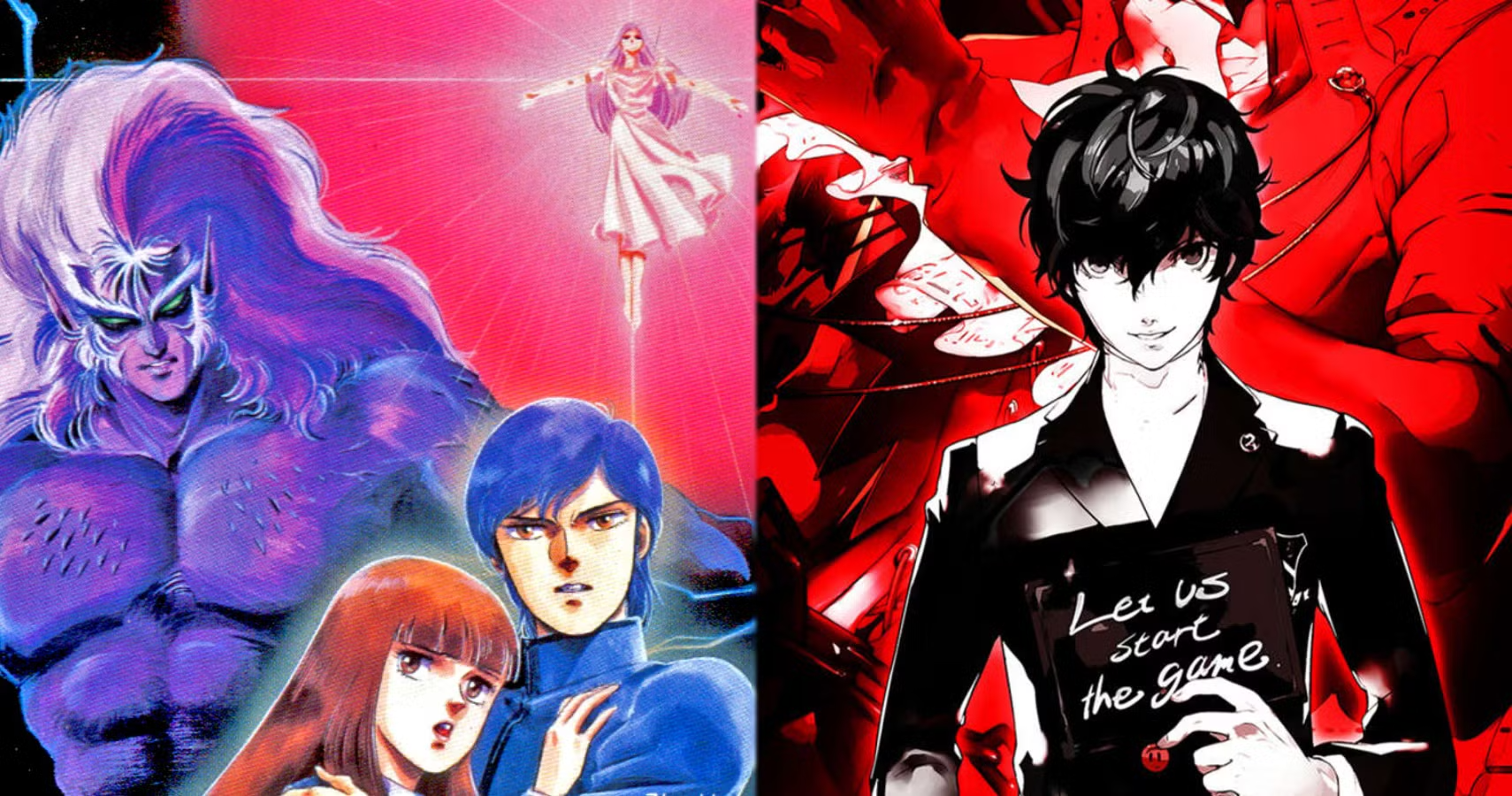
concept arts by Shigenori Soejima
Wait, are the demons just in our heads?
The video game franchise Megami Tensei stands as one of the most intellectually ambitious evolutions in interactive media, charting a thematic course from the gritty anxieties of late-20th-century technology to the deep recesses of the human subconscious...
The video game franchise Megami Tensei stands as one of the most intellectually ambitious evolutions in interactive media,
charting a thematic course from the gritty anxieties of late-20th-century technology to the deep recesses of the human subconscious.
In its infancy during the late 1980s and early 1990s, the series pioneered a distinct brand of cyberpunk occultism.
This narrative framework, heavily influenced by Sci-Fi literature and Japan's rapid postwar technological boom,
treated computers not merely as tools of computation, but as digital mediums capable of summoning and binding mythological demons.
By blending high-tech Tokyo landscapes with ancient, apocalyptic theology,
the early titles captured a cultural zeitgeist terrified of, yet fascinated by, the invisible networks of the emerging information age,
positioning technology as the ultimate gateway to the supernatural.
As the franchise matured throughout the 1990s, this externalized conflict between humanity, technology, and deities began to turn inward,
paving the way for the birth of its wildly successful spin-off series, Persona.
The evolutionary turning point occurred as the narrative focus shifted from saving a digitized world from
literal demons to surviving the psychological landscapes of the modern individual.
This transition was heavily codified through the lens of Carl Jung’s analytical psychology.
The literal demons of the parent franchise were systematically recontextualized as "Personas" and "Shadows", the archetypal
manifestations of the ego, the repressed subconscious, and the collective unconscious.
Instead of negotiating with external gods to alter fate, characters were now forced to confront their inner selves,
illustrating a narrative leap from technological dread to psychological introspection.
Ultimately, the trajectory from Megami Tensei to Persona represents a
profound philosophical migration regarding how we define the "monsters" of our existence.
While the original series posited that the end of the world would be facilitated by cold machinery and ancient curses,
the Persona framework argues that the true battleground is the human mind itself.
By utilizing Jungian concepts such as the integration of the Shadow and the societal mask of the Persona,
the franchise transformed from a niche cyberpunk dystopia into a universal exploration of identity, mental health,
and social conformity. This evolutionary narrative demonstrates how a video game series successfully transitioned from
critiqueing the external networks of the digital revolution to mapped the internal complexities of the human soul.

The first Japanese Embassy to Europe, in 1586.
How the Tenshō Embassy Flipped the Script on 16th-Century Cultural Exchange
In 1582, a remarkable and unprecedented diplomatic journey began when the Italian Jesuit Alessandro Valignano organized the Tenshō Embassy, sending four young Japanese noblemen—Mancio Itō, Miguel Chijiwa, Julião Nakaura, and Martinho Hara—to Europe...
In 1582, a remarkable and unprecedented diplomatic journey began when the
Italian Jesuit Alessandro Valignano organized the Tenshō Embassy, sending four young Japanese noblemen Mancio Itō,
Miguel Chijiwa, Julião Nakaura, and Martinho Hara to Europe. Traveling through Portugal and Spain before reaching Rome,
these teenage emissaries were not just passive observers;
they were the first official representatives of Japan to set foot on Western soil.
While the Jesuits primarily intended the voyage to showcase the success of their Christian missions
to the Pope and secure crucial financial backing, the embassy quickly transformed into a grand, mutual revelation.
For a Europe captivated by the Age of Discovery, the poised, highly literate, and deeply refined
Japanese youths shattered eurocentric stereotypes, proving that a civilization completely independent of the
Greco-Roman tradition could match, if not exceed, European standards of etiquette and intellectual sophistication.
The impact of the embassy, however, was a tragic double-edged sword that echoed profoundly upon their return to Japan in 1590.
During their travels, the young envoys were mesmerized by European innovations,
deeply moved by Western classical music, and even brought a Gutenberg printing press back to Japan to distribute Christian literature.
Yet, the geopolitics of their homeland had shifted catastrophically in their absence;
Regent Toyotomi Hideyoshi had launched a fierce campaign to unify Japan and had begun banning Christian missionaries,
viewing them as a vanguard for European colonialism.
The brilliant cultural bridge the Tenshō Embassy had built was abruptly dismantled,
forcing the members into exile, apostasy, or, in the case of Julião Nakaura,
a martyr’s death by torture. Though their mission was eventually swallowed by Japan's centuries-long policy of isolation,
the Tenshō Embassy remains a brilliant, bittersweet testament to a moment when two vastly different worlds met not through conquest,
but through genuine intellectual and cultural fascination.